Torque Reduced 25% after Installing SS and SS3 WWT NRPs
T&D Models Predicted High Torque
While planning an S-shaped directional well on a 3 well pad, the operator predicted drilling torque would exceed the rig’s limit of approximately 27k ft-lbs based on offset well data. The trajectory had a further step out and greater total depth than offset wells in the field. WWT Non-Rotating Protectors were selected as
the preferred solution to reduce torque within the rig’s operating limits.
NRP Recommendation
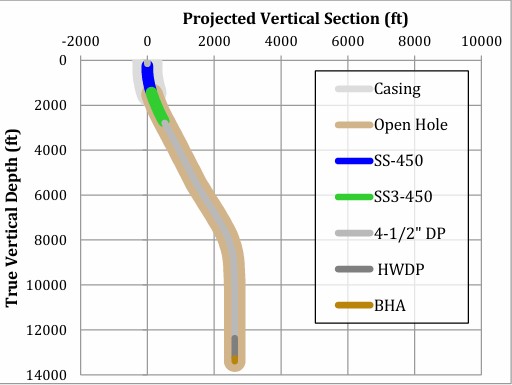
WWT Non-Rotating Protectors (NRPs) were recommended to be installed in the shallow build and tangent section of the well. A total of 39 SS-450 and 45 SS3-450 NRPs in cased and open hole respectively
were installed at a frequency of one per joint. The shaded blue and green areas, in the projected vertical section plot, represent the NRP placement at TD.
Estimated 25% Torque Reduction
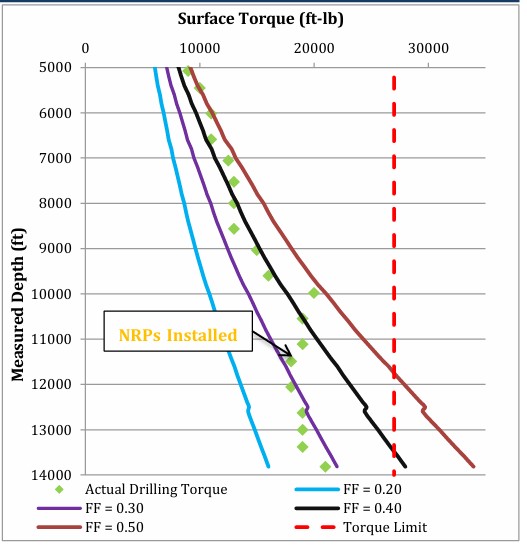
Prior to installing NRPs, the torque trend generally stayed between friction factors of 0.40 to 0.50. Torque immediately dropped after installing NRPs at approximately 11,000ft MD. The friction factor sensitivity plot accounts for a 1ppg increase in mud weight 12,500ft MD as shown by the shift in modeled torque due
to the effect of buoyancy.
Comparing the trend prior to installing NRPs, to the actual torque at TD suggest that torque was reduced up to 25% keeping torque well below the rig’s limit. This is one of multiple wells in the same area the operator has run protectors and experienced similar results.