In well completions wear modeling is a necessary design driver to insure decades of production. As wellbores become deeper, higher pressure, higher temperature, higher dogleg sidetracks and more aggressive intervention programs, traditional linear wear assumptions for completion operations can introduce significant uncertainty into the longevity of the well
This is where nonlinear wear factor analysis becomes important.
Understanding Wear Behavior in Completion Systems
Wear in tubulars and completion components is not always proportional to contact force or drill pipe rotations (krevs). In downhole environments, wear progression accelerates as geometry, loading conditions and material interactions evolve. This creates a nonlinear relationship between work string rotation and resulting material loss where initial wear can occur very rapidly, but then slows after a groove is worn and the force is distributed. This is similar to the sharp edges of a new eraser that quickly round off with use.
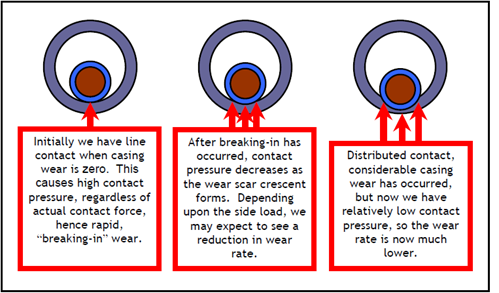
Linear wear models assume a predictable, proportional increase in wear overtime. While useful for simplified calculations, these models can underpredict localized wear in high-risk production casing where accuracy is required for burst and collapse calculations.
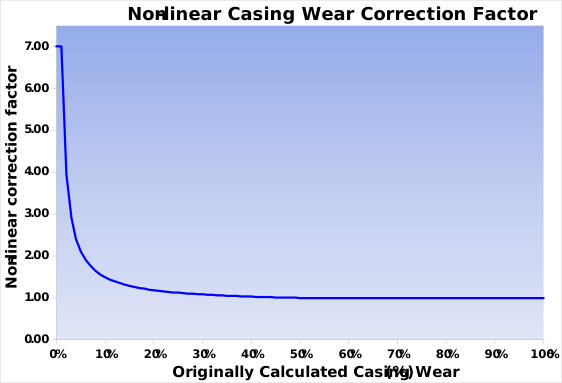
Nonlinear wear factors attempt to model the changing interaction between force, motion, friction and evolving geometry during operations by more accurately following the wear depth to volume loss ratio as wear progresses shown in the correction factor plot above. The result is a more realistic representation of how wear accumulates under actual field conditions.
Why This Matters for Completion Designs
As completion programs become more technically demanding, small inaccuracies in wear prediction can materially impact equipment selection and risk assessment.
For example, in certain completion configurations, applying nonlinear wear factors may indicate the need for additional protective measures that would not appear necessary under a traditional linear model. In some cases, this can drive the inclusion of drill pipe protectors or alternate component designs to mitigate concentrated wear exposure.
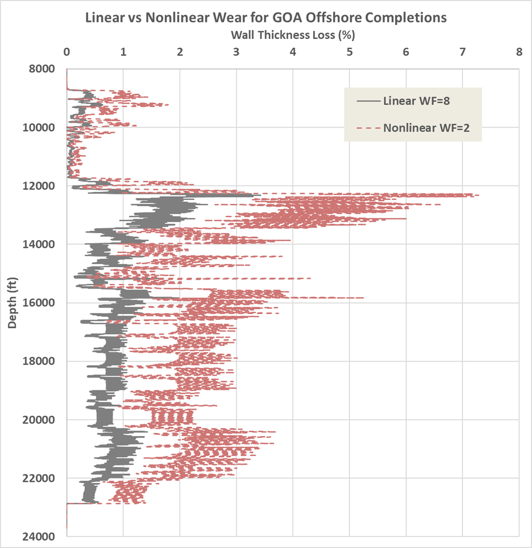
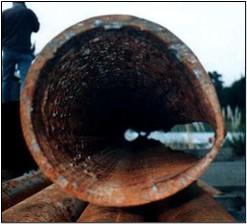
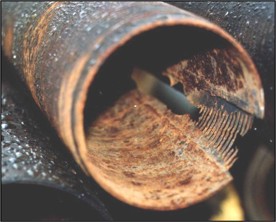
The challenge is that wear does not occur uniformly. Wireline runs, cleaning assemblies and brine, among other unique completions challenges, can significantly change the wear profile of the casing where the initial contact and loading location is of utmost significance. A linear assumption may fail to capture this compounding behavior and underestimate the initial wear rate.
This is especially relevant in modern completion environments where:
* Contact forces are higher
* Operational windows of burst and collapse are narrower
* Intervention frequency is increasing
The Role of Advanced Analysis
Accurate wear prediction requires more than applying a generic factor. It requires understanding the mechanical interaction of the entire completion system under realistic operating conditions. Understanding how long range 3 joints of drill pipe actually wear the casing between long 125ft survey stations is a nuanced analysis, especially near sidetracks or casing crossovers.
This is where advanced engineering analysis becomes critical.
At WWT International, our non-rotating protector (NRP) expertise extends beyond standard wear calculations into detailed nonlinear analysis that evaluates how wear evolves throughout completion operations. By incorporating realistic loading conditions, contact behavior and operational scenarios, we help operators better understand where risk concentrations may develop and how mitigation strategies can be applied early in the design process.
Rather than relying solely on simplified assumptions, nonlinear analysis enables:
- Improved prediction of localized wear
- Better casing protector placement strategies
- More informed completion component selection
- Collaboration between drilling and completions teams
- Reduced uncertainty in high-risk operating environments
- Increased confidence in long-term completion integrity
Moving Beyond Simplified Assumptions
As wells continue to become more complex, the industry is moving toward higher-fidelity engineering methods across drilling and completion design. Wear modeling is no exception. Modern computing can compensate for some of the uncertainty downhole.
Nonlinear wear factor analysis provides a more realistic framework for understanding how completion operations can affect well life under actual operating conditions, particularly in environments where casing wear can have significant operational consequences.
For operators evaluating completion integrity, NRP application, or long-term wear exposure, advanced nonlinear analysis offers a more robust basis for engineering decisions than traditional linear assumptions alone.