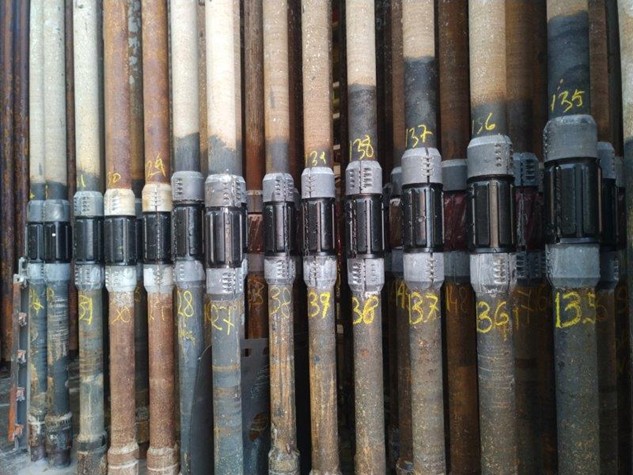
How Our Collars Resist Corrosion to Protect Your Assets
Corrosion is a hidden threat in many industrial environments as metals naturally lose electrons over time, reacting with moisture, salts and chemicals to form rust or other corrosion products. This chemical reaction can compromise equipment performance, safety, and longevity causing equipment failure and unwanted NPT.
Composition Matters
The composition of our collars and sleeves is carefully engineered to resist corrosion. By selecting materials with strong resistance to oxidation and combining them with protective coatings, we ensure that our collars maintain their structural integrity even in challenging conditions. NRP collars are made of aluminum to preferentially corrode rather than the rig contractor’s expensive drill pipe. This carries over knowledge of zinc anodes from WWT’s marine engineering heritage.
Harsh Environments
Not all environments are equal as saltwater, brine, acidic conditions and high humidity are especially corrosive. Exposure to these conditions accelerates metal degradation, making corrosion prevention critical for long-term performance. Additionally, velocities in the annulus while drilling can reach up to 1,000 ft/min carrying coarse cuttings and chemicals that can cause erosion as well as corrosion. Our durable finishes withstand these harsh conditions to better protect the well. NRPs reduce friction successfully even in low viscosity completions fluids to relieve torque and tension concerns when milling plugs, setting packers or pulling out of deep wells with small drill pipe.
How We Protect Against Corrosion
We use a combination of strategies to ensure long-lasting performance:
- Protective coatings that act as a barrier against corrosion and erosion
- Rigorous material selection for corrosion-resistant alloys
- Extensive testing under simulated harsh environments to confirm durability
By proactively addressing corrosion, our Non- Rotating Protectors deliver consistent performance, longer service life, and peace of mind for our clients. In short, NRPs absorb both mechanical wear and corrosion to allow the well to successfully produce for decades. They can also mitigate wear in reentries, sidetracks and workovers to give aging wells new life.